Description: Amazon QuickSight is a business intelligence platform competitive with Tableau and Microsoft Power BI. QuickSight serves hundreds of thousands of customers and provides a data visualization solution that works seamlessly on data hosted in various AWS services.
I led the UX ideation and design to solve complex user flows based on user telemetry analysis that I conducted and validated with customer surveys. This led to an ideation and research based approach to addressing the issues with small user testing on AWS internal customers.
WHAT'S THE PROBLEM BEING SOLVED?
Customers were struggling to use the QuickSight narrative insights. It's an AI-powered feature that can be used to
interpret a customer's data and generates plain-language summaries directly on their dashboard. Instead of forcing
users to analyze a complex chart or data table to find a trend, narrative insights does the heavy lifting by writing
out bullet points like "Sales increased by 15% last month, driven primarily by the Midwest region."
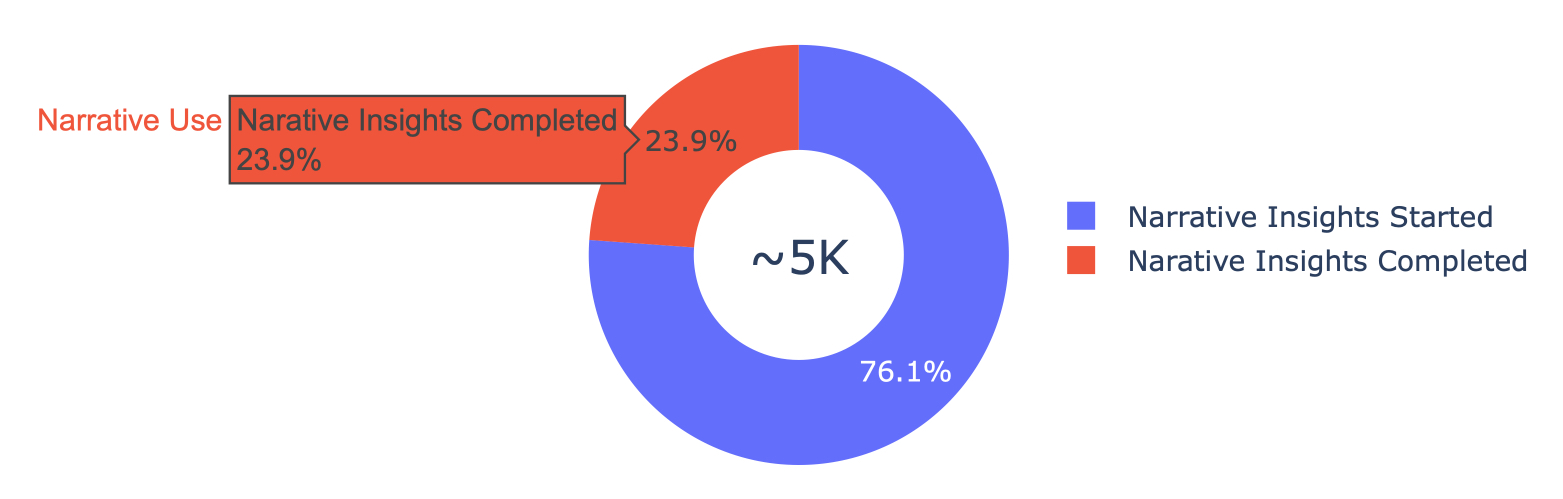
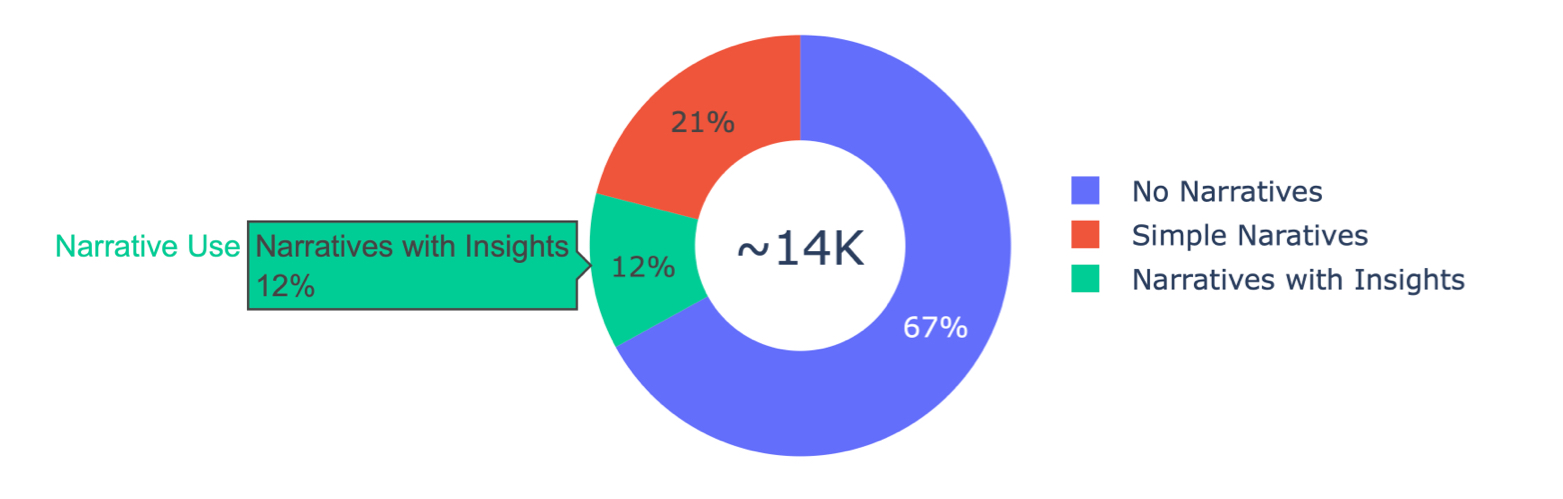
To confirm the problem I worked with engineering for data warehouse access (Redshift) then personally ran the analysis on the telemetry data, and combined with
customer surveys, the data was clear: each month, only 23.9% of the narrative insight additions to BI dashboards that customers
started were ever completed. Customers wanted to use the feature, but all the data pointed to the user flow being
too complex.
WHO ARE WE SOLVING IT FOR?
Primarily technical business analysts who were used to creating narrative insights from QuickSight custom computations on their business data. This was due to the introduction of that use case when the narrative insights feature was first launched. In addition we were hoping to target non-technical users who did not use narratives and those that used simple static narratives.
HOW WE SOLVED IT
Improved complicated workflows to simplify the user journeys
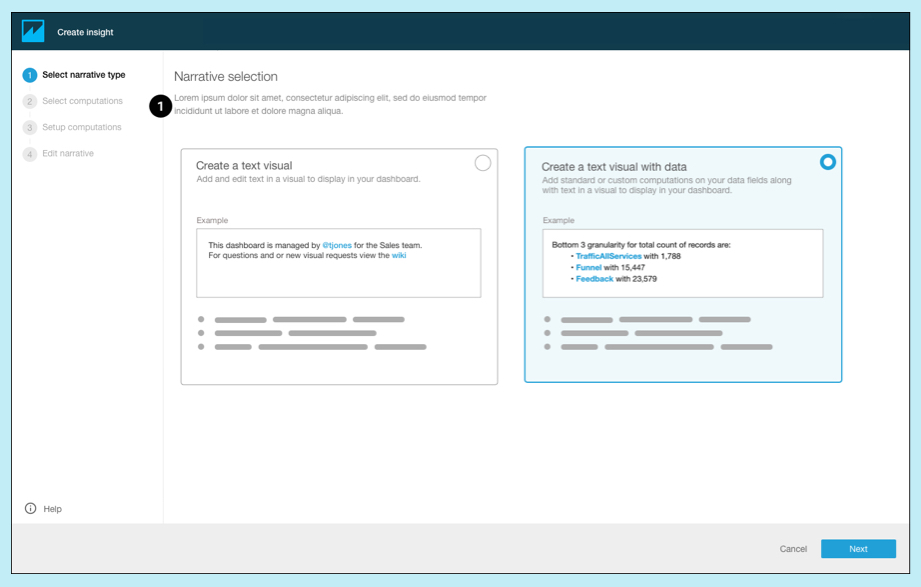
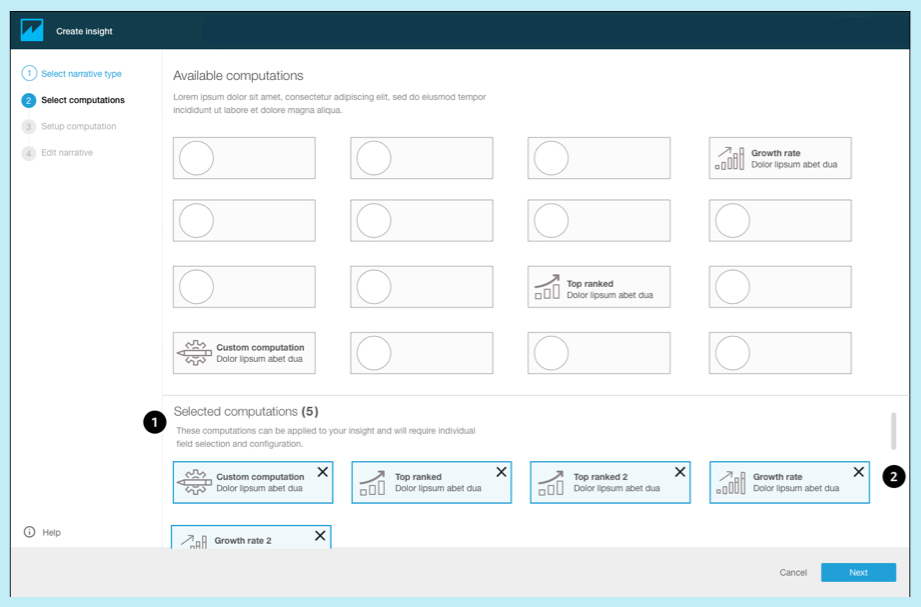
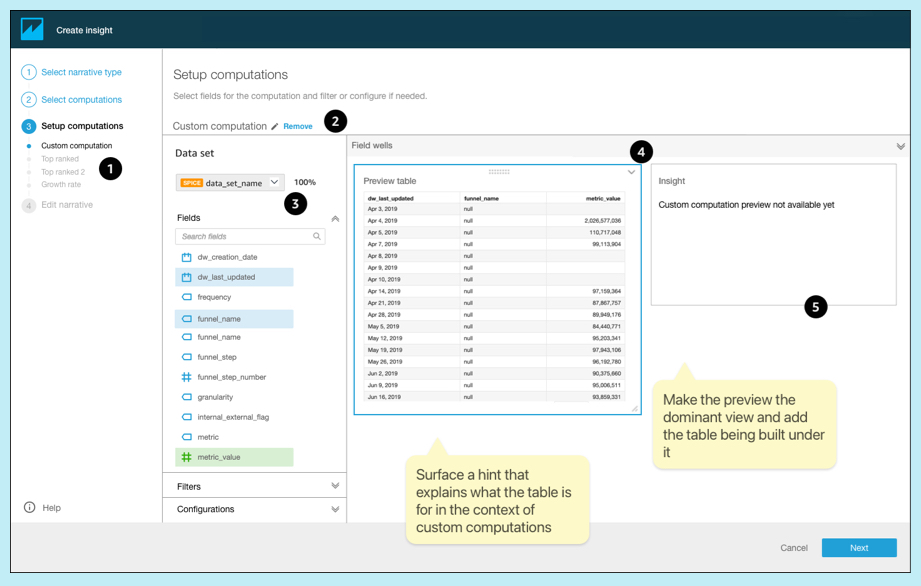
Replaced the modal heavy UI with a step wizard
Derived insights from telemetry data to inform design decisions
Conducted iterative user testing on internal users
PREPARATION
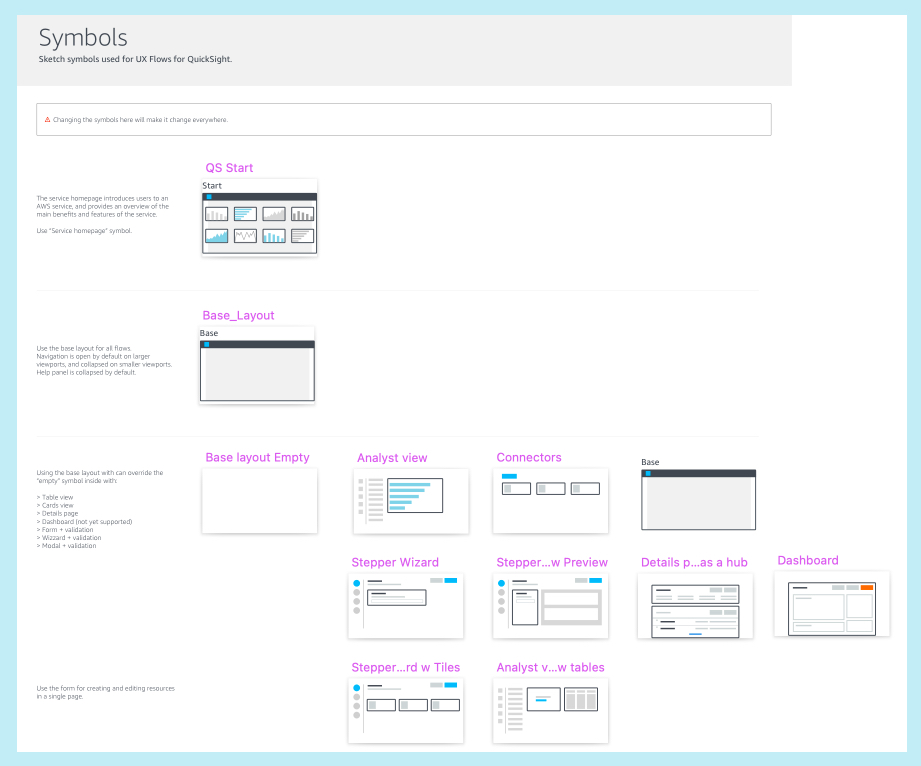
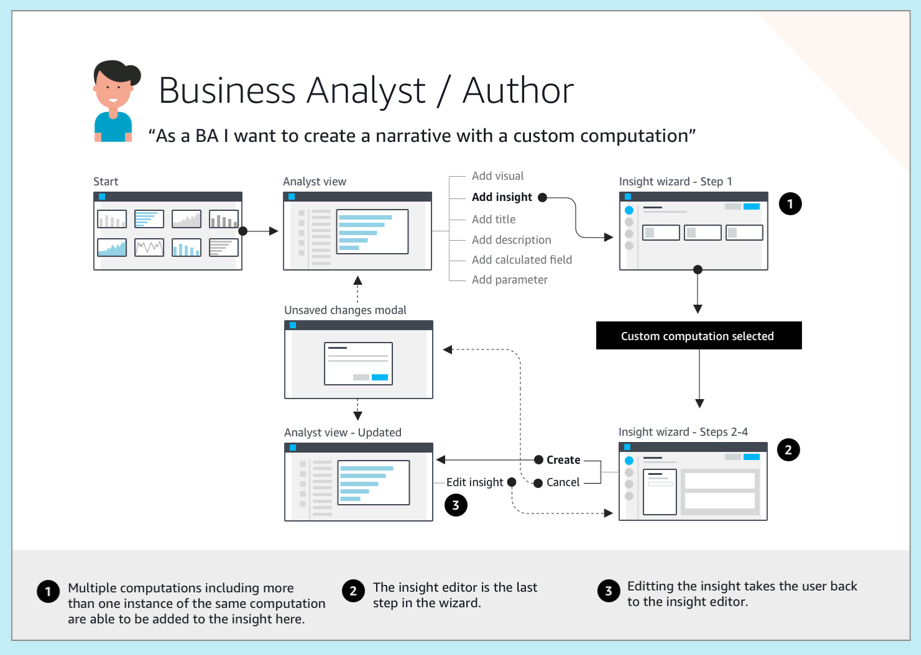
Design teams in Amazon use an internal library of user flow symbols that compliments their design systems. QuickSight did not have a symbol library like this so I created it.
CURRENT EXPERIENCE
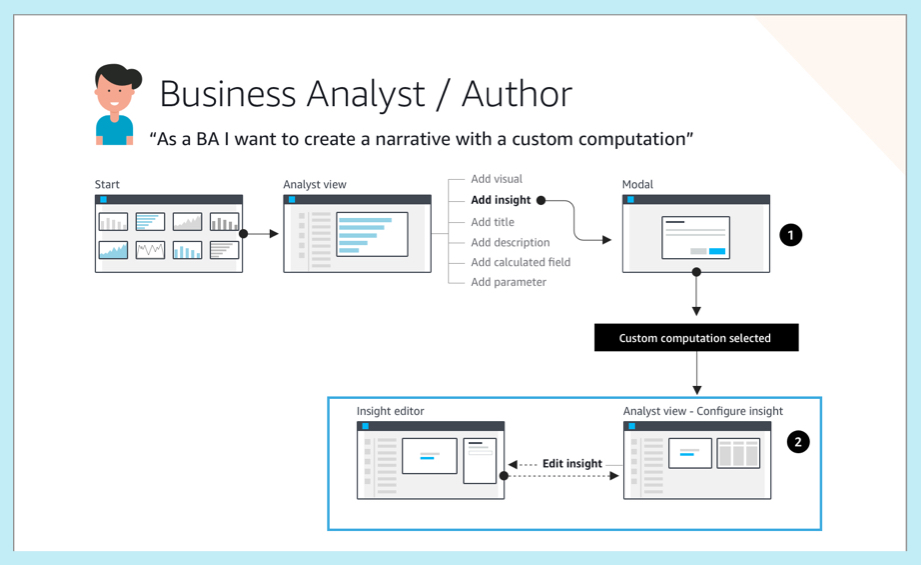
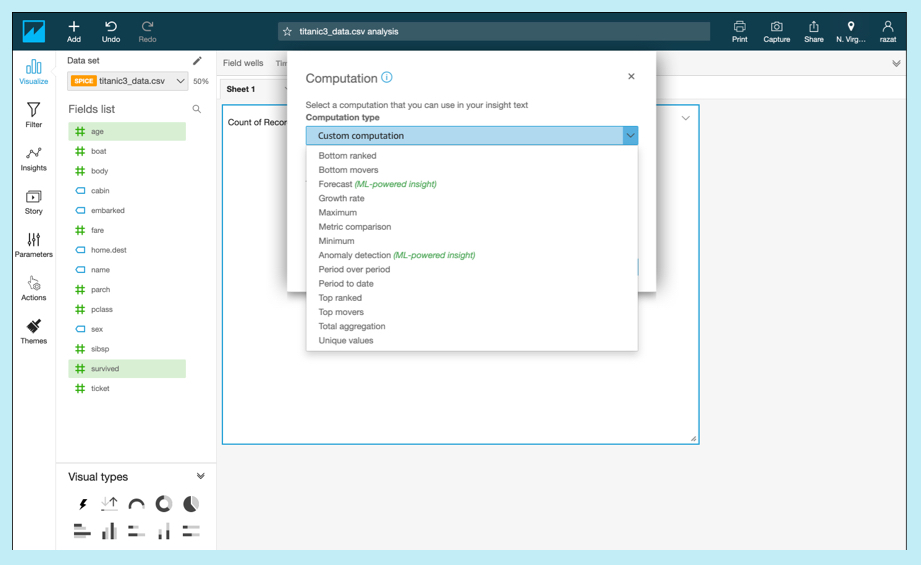
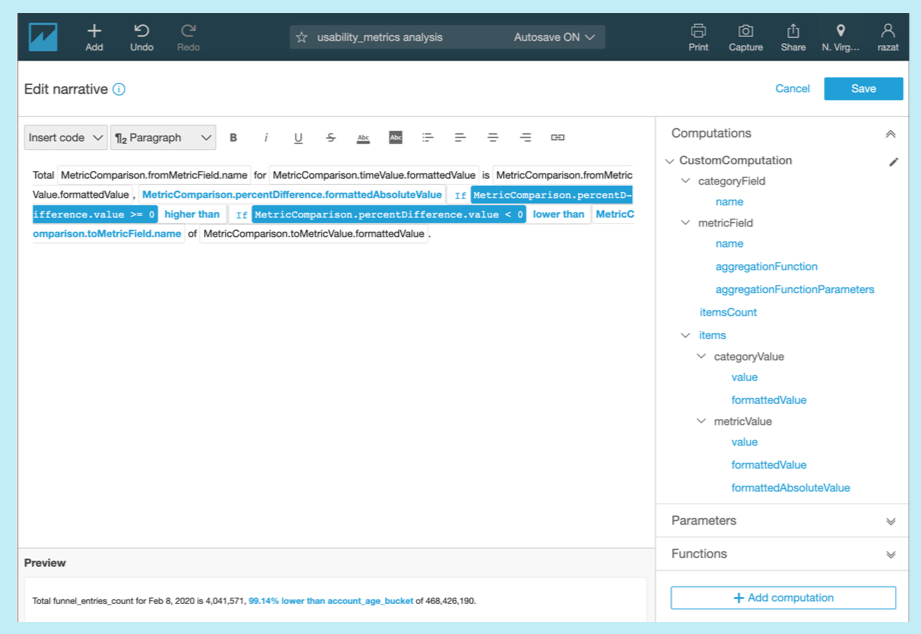
The existing experience took customers from a modal directly into a configuration interface with very little explicit affordance to guide them to the successful creation of narrative insights.
Users had no way of knowing that selecting custom computation from the drop down selection in the modal would trigger the narrative insights editor.
In addition the insight editor interface also made it difficult to view and edit multiple computations.
PROPOSED EXPERIENCE
Amazon QuickSight was introduced in 2016 and iterated very quickly over the next four years with features to bring parity with competitor offerings. Modals were a popular way to expend features but by 2020 wizards and stepper interfaces were more familiar to users.
In addition to enabling explicit affordance the narrative insight creation wizard also resolved several other experience problems such as, displaying all applied computations with directional paths to adding, deleting and editting.
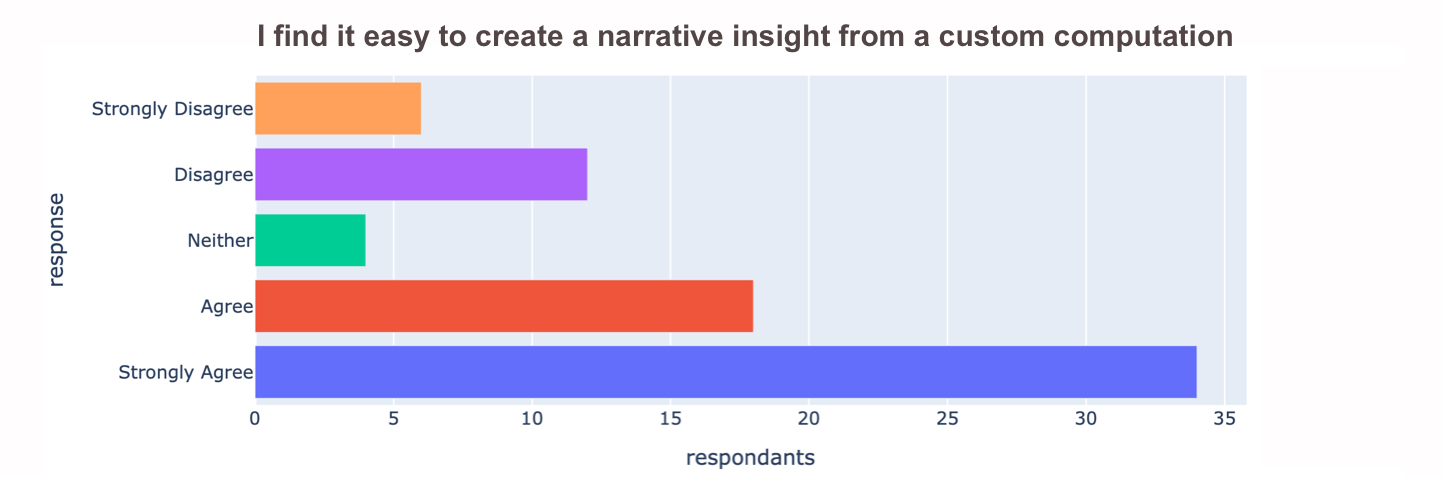
The development of QuickSight Q in 2020 led to the reprioritization of various design and quality of life updates. As a result our internal testing coupled with the designs for an updated UI/UX for the narrative insights were captured in a document and added to the official product roadmap. In a final internal user survey we saw significant signal that the redesign would lead to increased usage of the narrative insights feature across novice to advanced end-users.


–